
Vulnerability Sets 'Liberation' Free on Broadway
My review of Bess Woh's new play.

This is my first attempt at writing a theater review, or really a review of any kind! This is something I’d like to do more for the sake of my business, and would appreciate any constructive criticism, as this is not a form in which I am experienced.
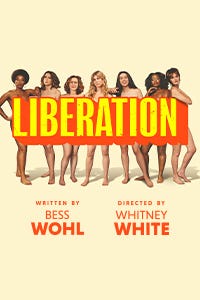
On Friday, October 17th, my team was invited to a preview of the new play Liberation, written by Bess Wohl, at the James Earl Jones Theater on Broadway.
It took me a few days to digest, but what I witnessed that night was one of the more personal and vulnerable pieces of theater I’ve had the privilege of experiencing.
The play tells the story of a woman reconstructing, or in fact re-living, her mother’s life in the 1970s women’s liberation movement, grappling with the great question: what went wrong? Why do we still seem to be fighting the same battles today, with little progress to show?
While I personally look askance at the premise of the question (cultural change takes generations to take root), I applaud Wohl, and particularly the cast of Liberation for their authentic exploration of the time period and its present-day parallels.
Susannah Flood embodies both the present-day Narrator and early-1970s Lizzie (the Narrator’s mother), seamlessly breaking the fourth wall and slipping between past and present. Lizzie eventually chooses family, love, and career over the small town women’s lib group she founded, prompting Lizzie’s Narrating daughter to ask if it’s all her fault that women are still fighting for equal rights. When written on the page, the inquiry sounds ridiculous: of course it’s not all pinned on you! But Flood’s open-hearted performance along with Wohl’s words and Whitney White’s direction allow us into the guilty psychology that so many survivors of cultural conflict bear.
Broadway veteran Betsy Aiden serves as Margie, the group Mom whose life is so tied up in the patriarchy that when she does finally get her husband to recognize her many domestic contributions, she’s not sure she even likes it when he tries to help out: she can tell by sound alone that he’s doing the dishes wrong, and she’d rather just do them herself. Aiden’s anchoring performance grounds the play in the reality that change happens over generations, and as tough as it seems for women now, society has made quite a bit of progress: in Margie’s day the female half couldn’t even open their own bank accounts.
Irene Sofia Lucio shines as Isadora, the sassy Italian immigrant who is only married for the green card. No matter the moment, Lucio is fully engrossed in the scene, bursting with emotional energy even when her action is simply to listen to her cast mate’s many monologues. So integrated into the character was Lucio, that she showed no distraction when small bits of her costume fell to the stage amidst one of her speeches, and with perfect naturalism found the right moment to scoop them without drawing any extra attention. It is moments like these that are at the heart of theatrical magic.
Director Whitney White artfully seduces the audience into the 70s with a wonderful soundtrack and Flood’s perfectly personal audience addresses. I particularly enjoyed that the scene is not fully broken at intermission when the Narrator’s future father Bill - played by Charlie Thurston - playfully shoots hoops on the simple yet effective stage representing that basement of a rec center while the audience finds its way to the bar and the bathroom.
The second act kicks off with the much-marketed nude scene for which your phones must be powered down and locked away. Audrey Corsa as Dora has evolved from the group’s accidental attendandee to leading an exercise in which the women confront both what they love and hate about their naked bodies. Corsa’s character shows the most growth of all in the play, both with the emotional freedom the actress brings to Dora, and the increasingly hip costuming (by Queen Jean) she wears when not baring it all.
The vein of vulnerability peaks with the nude scene but is never lost, as the playwright leads us to the beautiful moment of Aiden transforming into the character of Lizzie so the Narrator can finally ask the questions that her late mother never answered.
Adina Verson personifies the under-housed, over-intellectual lesbian Susan whose wayward journey of radicalism poignantly highlights the diversity and comedy of the group’s struggles.
And though not every scene pushed the plot forward, rather serving as discussion pieces on the topic of women’s issues, the white playwright is unafraid of confronting the race element of the period when leaving alone on stage the play’s two black characters. How can one talk about the women’s lib movement without talking about civil rights? Yet how can a white person authentically represent the experience of a black woman? Wohl does not shy away, letting Celeste (Kristolyn Lloyd) and Joanne (Kayla Davion) discuss the irony of scheduling a women’s group at a time when most mothers are wrangling children for dinner and homework.
The most artful handling of the racial topic comes when Davion, an otherwise token character, steps in to embody Lizzie the lead when the Narrator can’t handle depicting a romantic scene across from her dad. This moment speaks to a shared humanity that goes deeper than melanin; indeed, the stories we choose to tell are intentional framings that - out of narrative necessity - must center some issues over others. These story-telling choices need not divide us, but can rather, when handled as delicately as Liberation does, illuminate our common connection.
While Flood and Lucio stood out to me as artists to keep an eye on, there was not a weak link in this cast and I look forward to seeing more of them all on stage and screen. Though not flawless, the combination of a wonderful cast and a vulnerable script makes Liberation at the James Earl Jones Theater on Broadway a worthwhile night at the theater.
Also,
Thanks.